Apple's New Montreal Store Is a Bet Against the Death of Downtown Retail
Apple just opened a new store in Montreal. I know, I know—not exactly breaking news in the usual sense. But there’s something worth paying attention to here, and it’s not the store itself.
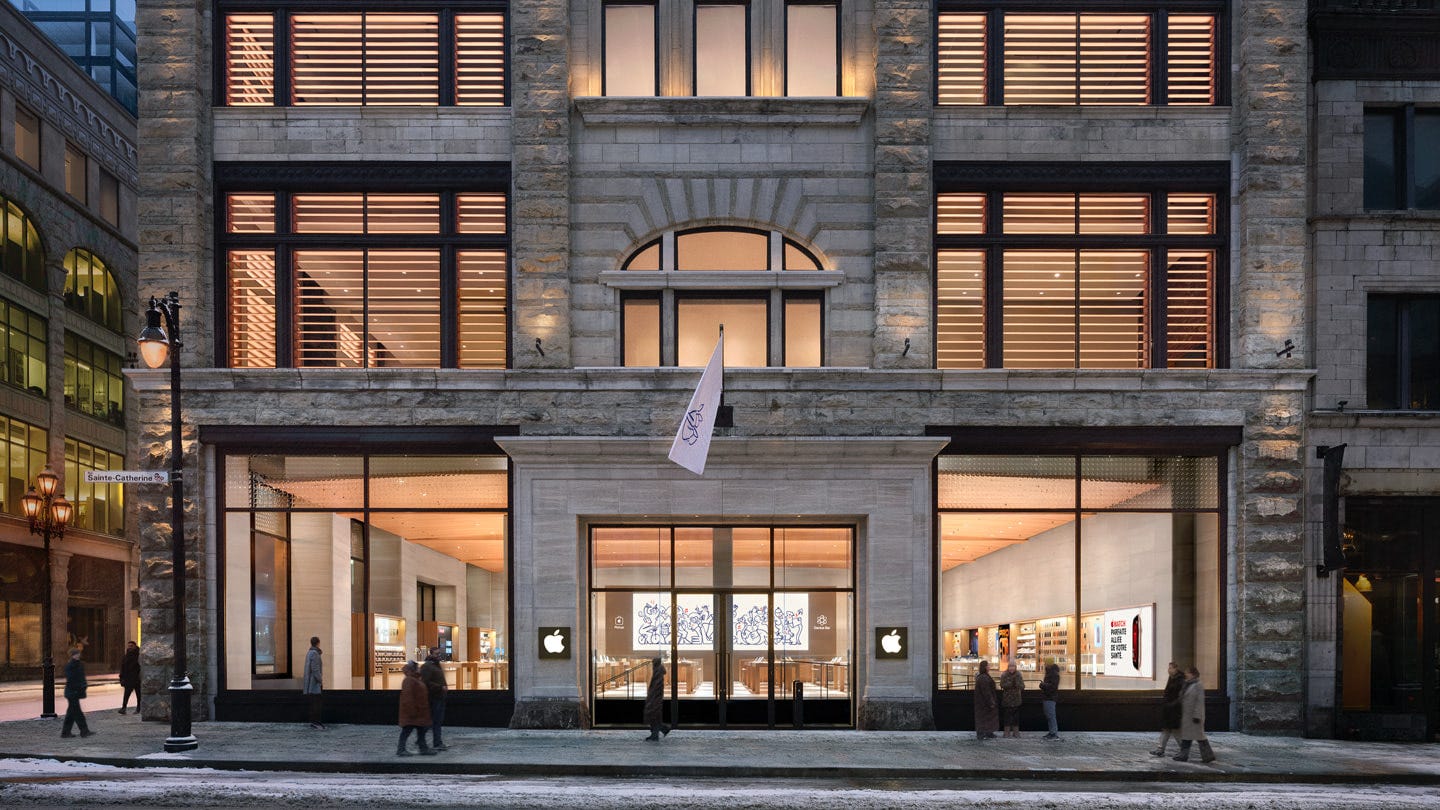
The new Apple Sainte-Catherine sits on the corner of Sainte-Catherine Street West and Rue de la Montagne, in a historic building that Apple has extensively restored. Local copper artisans fixed up the cornice. The facade blends Saint-Marc stone from Quebec with local granite. The store more than doubles the size of the previous location, which had been operating in downtown Montreal for nearly twenty years.
And here’s what caught my attention: Apple now has 28 retail stores across Canada, five of them in Quebec alone. They’re not just maintaining these spaces—they’re expanding them, investing in them, making them bigger and more elaborate. At a time when most retailers are abandoning downtown cores and shifting everything online, Apple keeps building cathedrals.
I’ve been thinking about this for a while, actually. The conventional wisdom says physical retail is dying, that the pandemic accelerated an inevitable shift to e-commerce, that downtown shopping districts are relics of a pre-Amazon world. And yet Apple, the most valuable company on the planet, keeps betting on storefronts. The new Montreal location has nearly 200 employees. Two hundred people working in a single retail store in 2026.
There’s a cynical read here, obviously. Apple stores are marketing as much as they are retail—temples to the brand where you can touch the products and absorb the aesthetic. The Montreal opening featured a local artist drawing illustrations on shopping bags, which is charming but also precisely the kind of curated experience that turns a store visit into social media content. The press release mentions “Today at Apple” sessions where you can learn to edit video or get started with Apple Intelligence. It’s retail as lifestyle programming.
But I think the cynical read misses something. Physical space still matters in ways we haven’t fully reckoned with, even as we’ve spent years hearing that it doesn’t. There’s a reason Apple invests in restoring historic buildings rather than just leasing generic commercial real estate. There’s a reason they hire local artisans and commission local artists. They understand that a store can be a statement about commitment to a place, not just a point of sale.
Downtown Montreal, like most North American city centers, has struggled with retail vacancies and the slow hollowing out that happens when commerce moves online and workers stay home. Apple planting a flag—a bigger flag than before—is notable precisely because it runs counter to the trend. Whether you think it’s genuine community investment or just good PR, the effect is the same: a major company saying this place is worth being in.
I’m not naive about Apple’s motives here. They’re not a charity. The stores exist because they drive sales and build brand loyalty in ways that online retail can’t replicate. But there’s something almost old-fashioned about the bet they’re making, this idea that you need to show up somewhere, physically, with real employees and real architecture and real presence. That you can’t just be a website and a shipping label.
The tech industry spent years telling us that everything was going virtual, that physical presence was inefficient, that the future was frictionless and disembodied. Apple keeps building stores. Big ones, in historic buildings, with copper cornices and stone facades and two hundred people ready to answer questions about your iPhone.
Maybe they know something the rest of the industry forgot.
Source: https://www.apple.com/newsroom/2026/01/the-new-apple-sainte-catherine-opens-today-in-montreal/