Sanctuary Cities Don't Protect Immigrants the Way You Think | Code Switch Podcast Review
I’ve been thinking a lot about the word “sanctuary” lately. It conjures something sacred, doesn’t it? A place of refuge. Somewhere you can exhale. And yet, after listening to the latest episode of Code Switch, I’m not sure we’ve been using that word honestly.
The episode features anthropologist Peter Mancina, who spent years embedding with police in New Jersey and reviewing body cam footage to understand what “sanctuary” actually means on the ground. His book, On the Side of ICE: Policing Immigrants in a Sanctuary State, should probably come with a warning label for anyone who’s taken comfort in the term. The findings are uncomfortable, at least for me, because they suggest that both sides of the political aisle are wrong about what sanctuary policies actually do.
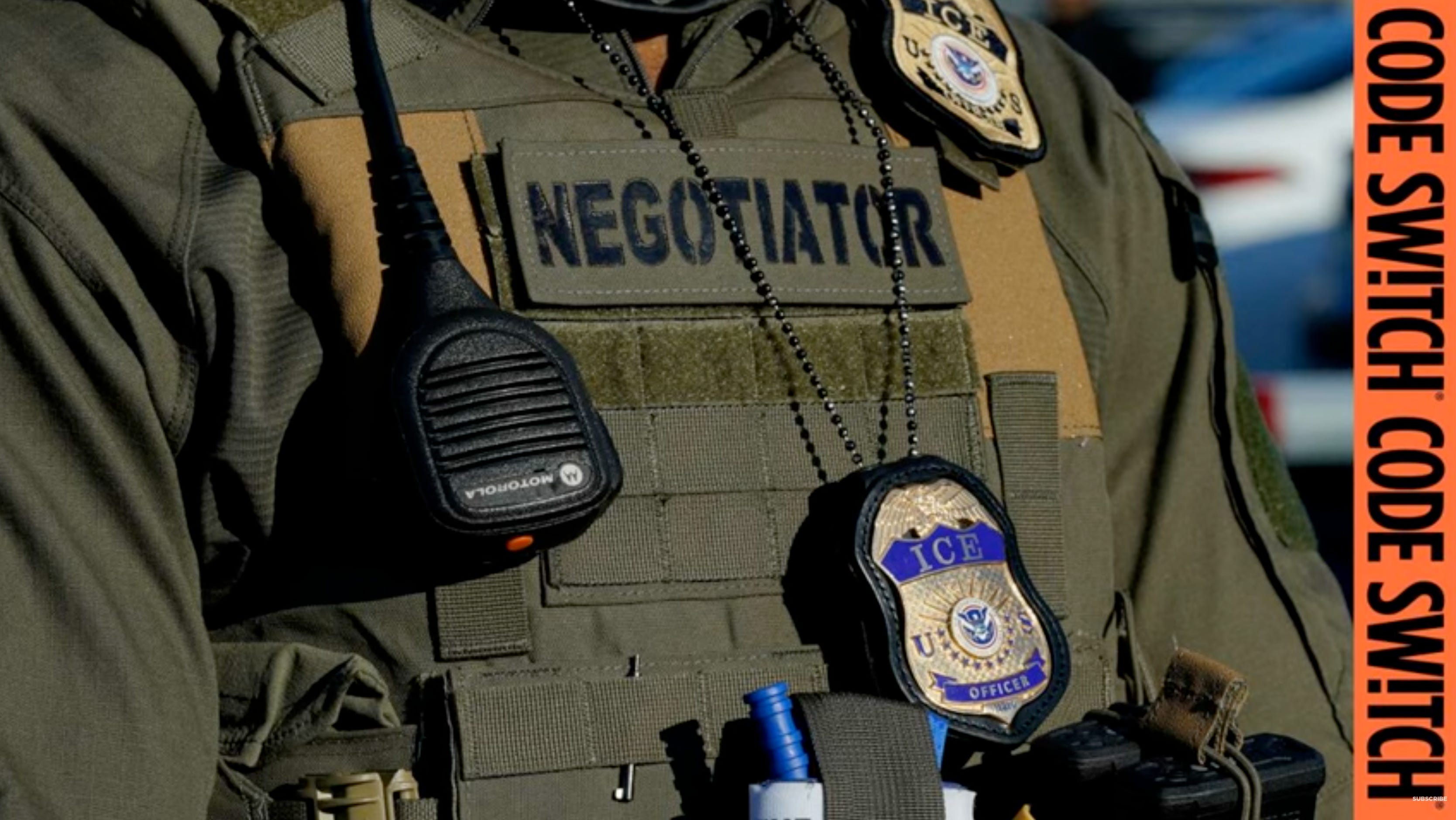
Here’s what Mancina discovered: Local cops in sanctuary jurisdictions are still helping ICE. A lot. Not always, but more than the branding would have you believe. In one scene from his body cam research, ICE agents cornered a Mexican man in his car as he was about to drive his teenage son to work. The agents asked the local cops if they were recording, and when the cops said yes, an ICE agent used that to pressure the man, telling him everything was being captured and would be used against him. The local police were technically “not participating” in the arrest. They were just controlling the crowd, blocking the man’s exit with their squad car, and shooing away neighbors who came to see what was happening. They were, in other words, doing exactly what a force multiplier is supposed to do.
That term, “force multiplier,” comes from military strategy. It describes any local partner that helps advance your objectives without being officially part of your operation. ICE has been using it since the mid-2000s to describe local law enforcement. And it works both ways. Local cops see ICE as their force multipliers too. When they work together, they frame it as mutually beneficial.
The episode traces how we got here, and the history is grimmer than I expected. Going back to the Reagan administration, the INS would show up at local jails, ask for the roster of inmates, and literally scan it for Latin American names. Just straight up racial profiling, right there in the open. That partnership deepened after September 11, when the Bush administration built interoperable databases connecting local, state, and federal law enforcement. Now, every time someone’s fingerprints are taken during a booking, the FBI automatically sends that information to ICE for an immigration status check. Local agencies can’t opt out. California tried and was told the program was mandatory.
So immigrant rights advocates pivoted. If you can’t stop the fingerprint sharing, at least you can pass laws limiting what happens next. That’s where sanctuary policies came from. They say, in effect, that local cops don’t have to comply with ICE’s requests to hold someone in jail until federal agents arrive. These “detainer requests” are not legally binding. They’re favors. But here’s where it gets complicated: those same sanctuary policies almost always include exceptions. If someone’s accused of a serious crime, local cops can still cooperate with ICE. And those exceptions, Mancina argues, are the crux of the whole system. They institutionalize the idea that it’s acceptable to help ICE deport certain people, and they create procedures for exactly how to do it.
Don’t get me wrong, sanctuary policies do some good. Mancina found they reduced voluntary transfers to ICE by about 30% in New Jersey after the state adopted its Immigrant Trust Directive. That’s 300 people who weren’t handed over. And studies show that Latino communities in sanctuary cities report crimes to police at higher rates, which suggests some level of trust is being built. However, that same policy creates what Mancina calls a “deportation procedures policy.” The vast majority of the language sounds pro-immigrant. But buried in the exceptions is a detailed roadmap for local cops to assist in immigration enforcement.
What struck me most about the episode was how it exposed the bipartisan mythology around sanctuary cities. Democrats use the term to signal that they’re protecting immigrants, heroically standing up to federal overreach. Republicans use it to paint these cities as lawless havens for criminals. But both sides are making the same fundamental claim: that sanctuary cities actually protect people from deportation. Mancina’s research suggests that neither is quite right. These policies are somewhere in between, and the gap between the rhetoric and the reality is where the damage happens.
This has real consequences right now. The Trump administration has sent federal agents into cities like Minneapolis, Chicago, and Los Angeles, framing these operations as necessary because sanctuary cities refuse to cooperate. But local cops in those cities are cooperating. Just not every single time. The siege, as Mancina puts it, is based on a premise that isn’t entirely true.
And it gets worse. The 287(g) program, which deputizes local cops as federal immigration agents, has exploded under Trump 2.0. There were 117 such programs in 2022. Now there are 1,300. Every Florida highway patrolman is currently a federal immigration officer. If one of them shoots someone during a 287(g) operation, that family might have to pursue justice in federal court rather than state court, because the officer could claim federal immunity. JD Vance already suggested this applies to the ICE agent who shot Renee Good in Minneapolis, and the implications extend far beyond immigrants now. If you’re pulled over by a deputized officer, your rights might not be what you think they are.
So what would it actually take to stop this? Mancina says it would require rethinking the fundamental role of police in society. As long as cops are expected to respond to calls about crowd control, they’ll show up to ICE operations. As long as they clear roads and manage bystanders, they’re participating. No sanctuary policy can prevent that without telling police not to respond to certain calls.
And honestly? Maybe that’s exactly the conversation we should be having. Not just about sanctuary policies, but about what we actually want police to do and who we want them to serve. The fact that no mayor seems willing to draw that line doesn’t mean the line shouldn’t be drawn. It means our political imagination is too small.
The word “sanctuary” has been doing a lot of heavy lifting that it doesn’t deserve. It’s been a comfort to people who want to believe their cities are doing right by immigrants. It’s been a villain for people who want to believe those same cities are harboring criminals. Both stories are more convenient than the truth, which is messier and more morally complicated than either side wants to admit.
Maybe that’s the real takeaway. The policies we pass are never as clean as the press releases that announce them. The gap between intention and implementation is where most of us actually live. And if we’re serious about protecting people, we need to stop pretending that the right label can do the work that actual structural change requires. Sanctuary policies aren’t the solution. They’re a negotiation with a system that was designed to do harm in the first place.
The full episode of Code Switch is available on the NPR website and wherever you get your podcasts. Peter Mancina’s book, On the Side of ICE: Policing Immigrants in a Sanctuary State, is available from Rutgers University Press.